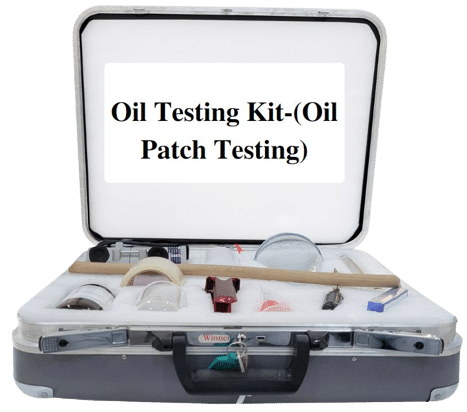
Oil Testing Kit Oil Patch Testing for Smarter Oil Cleanliness Monitoring

Inspect oil samples, identify visible contaminants, and support smarter maintenance decisions with Destiny International’s Oil Patch Testing Kit.

Oil_Testing_Kit-_Oil_patch_Testing_-removebg-preview

SMART OIL CONDITION MONITORING

Know Your Oil. Protect Your Machinery.

Identify visible oil contamination before it contributes to equipment wear, filtration issues, or unexpected maintenance challenges. Destiny International’s Oil Patch Testing Kit provides a practical solution for onsite oil sample inspection and filtration performance comparison.

Oil Patch Testing Kit

Regular oil cleanliness testing helps industries monitor lubricant condition, evaluate filtration effectiveness, identify contamination sources, and make better maintenance decisions before contaminants contribute to equipment wear or unexpected downtime.

An Oil Patch Testing Kit is an oil cleanliness inspection tool used to collect and examine contaminants present in an oil sample. During a patch test, an oil sample is passed through a suitable test membrane or filter patch. The particles and contaminants retained on the patch can then be visually inspected using appropriate lighting, magnification, or a microscope.

The test helps maintenance and quality-control teams understand the condition of the oil and determine whether additional filtration, oil replacement, or further laboratory analysis may be required.

Oil patch test is commonly used as a practical screening method for:

During machining operations, cutting fluids and coolants can collect contaminants such as:

  • Hydraulic oil contamination
  • Lubricating oil cleanliness
  • Gear oil inspection
  • Turbine oil monitoring
  • Metal particle detection
  • Sludge and sediment inspection
  • Filtration performance verification
  • Industrial fluid maintenance

Why Oil Cleanliness Testing Matters

Industrial oils perform critical functions such as lubrication, cooling, sealing, power transmission, and corrosion protection. When oil becomes contaminated with dust, metal particles, sludge, dirt, or other foreign matter, it may negatively affect equipment performance.

Contaminated oil can contribute to:

  • Increased component wear
  • Blockage of fine control valves
  • Damage to hydraulic components
  • Reduced lubrication efficiency
  • Abrasion of pumps and bearings
  • Increased operating temperature
  • Unplanned equipment downtime
  • Shortened oil and component life
  • Higher maintenance and replacement costs