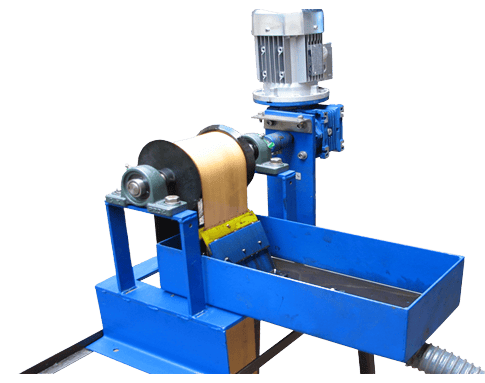
Still Draining Coolant Because of Tramp Oil?
Discover how Destiny's belt oil skimmers remove tramp oil from coolant, wastewater, and industrial fluids. Learn about belt materials, selection criteria, maintenance tips, and top applications for CNC machines, steel mills, and food processing.
Why Belt Oil Skimmers Matter
In every industrial operation where oil and water mix—whether in a CNC machine's coolant sump, a steel mill's scale pit, or a food processing plant's wastewater stream—tramp oil accumulation is an inevitable and costly problem. Left unchecked, floating oil contaminates process fluids, accelerates bacterial growth, shortens tool life, and drives up disposal costs. A belt oil skimmer is one of the most reliable, low-maintenance, and cost-effective solutions for removing free-floating oil from the surface of water, coolants, and industrial fluids.
Unlike complex separation systems that demand constant attention, belt oil skimmers operate on a elegantly simple principle: an oleophilic (oil-attracting) belt continuously passes through the contaminated liquid, picks up oil through surface tension and adhesion, and then discharges it via a wiper or roller mechanism. The result is a continuous, unattended process that keeps fluids cleaner, extends their service life, and reduces environmental impact.
Suitable for CNC Machines, VMCs, Machining Centres, Grinding Machines, Automotive Manufacturing and Industrial Metalworking Applications.
How Does Destiny's Belt Oil Skimmer Work?
The operating principle behind a belt oil skimmer is based on the differences in specific gravity and surface tension between oil and water. Oil floats to the surface, where it can be collected. A belt oil skimmer uses a continuous loop of oil-attracting material—typically an oleophilic belt—that descends into the liquid, passes through the floating oil layer, and then ascends to a discharge mechanism.
As the belt moves through the contaminated liquid, oil adheres to both sides of the belt. The belt then travels upward and passes through a set of wipers or between pressure rollers that squeeze or scrape the oil from the belt. The recovered oil drains into a collection trough or container for disposal or recycling. The clean belt then returns to the liquid to repeat the cycle.
This process is continuous and can run unattended for extended periods. Because belt skimmers rely on surface tension rather than pumps, they are particularly effective for removing light to medium-viscosity oils without emulsifying the liquid or disturbing the bulk fluid. The belt must be long enough to remain in contact with the liquid at its lowest level, ensuring consistent performance regardless of fluid level fluctuations.
The simplicity of the mechanism is one of its greatest strengths. With few moving parts and no filters to clog, a well-designed belt oil skimmer can operate for years with minimal intervention.